The Hidden Tax on Learning: Why International Students in Australia Are Losing Thousands Every Time They Send Money Home
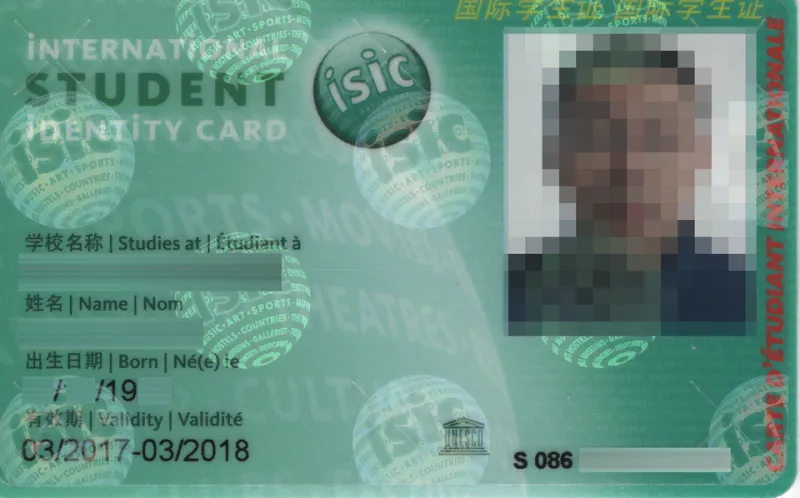
Photo: Zhanglide, CC BY-SA 4.0, via Wikimedia Commons
Australia hosts more than half a million international students at any given time. They come from across Southeast Asia, South Asia, China, the Middle East, and beyond. Many arrive with family financial support — funds sent from home to cover tuition, rent, and living expenses. Others work part-time and send earnings back to support relatives. In both directions, money moves across borders regularly, and in both directions, a significant portion of it disappears before it arrives.
The mechanism responsible is not fraud, though its effects can feel similar. It is the combination of opaque currency conversion margins, platform fee structures designed for a different customer profile, and a financial services market that has identified international students as a captive, high-frequency audience with limited time and limited alternatives.
Why Students Pay More Than Other Customers
International money transfer is a competitive market in Australia, but competition does not benefit all participants equally. The services that advertise most aggressively — the ones visible on university campus noticeboards, in student Facebook groups, and on the social media feeds of newly arrived students — are frequently not the most cost-effective options available.
They are, however, the most accessible. Many international students arrive without an established Australian bank account, without a credit history in this country, and with limited familiarity with the local financial services landscape. They need to move money quickly, often before they have had time to compare options. Services that offer walk-in convenience, multilingual support, or a familiar brand from their home country command a premium for that accessibility — and they collect it quietly through the exchange rate rather than through a visible fee.
The practice of embedding margin within the currency conversion rate is the most consequential hidden cost in international remittance. A service advertising zero transfer fees is not necessarily a low-cost service. If the exchange rate applied to the transaction sits 3 to 5 percentage points below the mid-market rate — the rate at which currencies actually trade between financial institutions — the customer is paying a fee. It is simply presented as a rate rather than a charge, which makes it considerably harder to identify.
On a $1,000 transfer, a 4% margin costs $40. For a student sending $500 home each month across a 10-month academic year, that margin costs $200 annually. Across a three-year degree, the cumulative cost approaches $600 — enough to cover several weeks of groceries, or a significant portion of one semester's textbooks.
The Student Visa Complication
Beyond the exchange rate issue, international students face a structural barrier that most other remittance customers do not: verification and compliance requirements that some platforms handle poorly for temporary visa holders.
Several digital money transfer services require proof of Australian residency, a domestic bank account of a certain age, or documentation that some student visa holders cannot readily provide. Students who are rejected by mainstream digital services — or who find the onboarding process prohibitively complex — frequently default to over-the-counter services at convenience stores, newsagencies, or informal money exchange operators. These services are typically the most expensive options in the market, with margins that can exceed 6 to 8 percentage points on the exchange rate.
The irony is that the students most in need of cost-effective transfer options are often the ones being funnelled toward the most expensive providers.
Targeting a Vulnerable Demographic
The financial services industry's interest in international students is not incidental. This demographic transacts frequently, sends relatively small amounts per transaction (which attracts proportionally higher fees on flat-fee structures), and tends to prioritise speed and convenience over cost comparison. These characteristics make them commercially attractive to high-margin service providers.
Marketing directed at international students often emphasises speed, familiarity, and ease of use. Cost transparency is rarely the headline. Some services operating near university campuses display exchange rates on physical signage without disclosing the mid-market rate for comparison — a practice that is legal but that makes informed decision-making difficult for anyone unfamiliar with how currency margins work.
Student community groups on social media platforms are frequently infiltrated by referral marketing for specific transfer services, where existing users are incentivised to recruit new ones. The promoted service is not always the best-value option — it is simply the one with the most active affiliate structure.
What Cost-Effective Transfers Actually Look Like
The good news is that the gap between the most expensive and most affordable transfer options is large enough to be worth closing. Several well-established digital transfer platforms operating in Australia offer exchange rates within 0.5 to 1.5 percentage points of the mid-market rate, with transparent flat fees that are clearly disclosed before the transaction is confirmed.
For students sending money to South or Southeast Asia, South America, or Africa, these platforms typically offer the strongest combination of rate competitiveness and coverage. Students sending to countries with less liquid currency markets may find fewer options, but comparison remains worthwhile.
The key steps for any international student evaluating transfer options are:
- Locate the mid-market rate for the relevant currency pair using a neutral financial data source before initiating any transfer. This establishes the benchmark against which all offered rates should be measured.
- Compare total cost, not just the headline fee. A service charging a $5 flat fee with a mid-market rate is almost always cheaper than a zero-fee service with a 4% margin on a $500 transfer.
- Assess delivery time relative to urgency. Faster services often charge more. If the transfer is not time-critical, the slower and cheaper option is rational.
- Verify the service's compliance with Australian financial services regulations. Legitimate transfer operators hold an Australian Financial Services Licence or are registered with AUSTRAC. This verification takes minutes and significantly reduces the risk of dealing with an unregistered operator.
The Incoming Direction Matters Too
Much of the focus on international student remittance centres on outbound transfers — students sending earnings or savings home. But inbound transfers, where family overseas send funds to support a student in Australia, carry the same fee exposure.
Families in the student's home country typically have even less access to cost-effective transfer options than the student does in Australia. They may be relying on local bank transfers or informal money exchange networks that apply substantial margins. Coordinating the transfer method — rather than leaving the decision to whoever initiates the transaction — can meaningfully reduce the total cost borne across both ends of the exchange.
Students who regularly receive funds from family are in a position to recommend a specific platform or method to their relatives, effectively taking ownership of the cost on both sides of the transaction.
The Broader Picture
The financial pressure on international students in Australia is well documented. Tuition fees, accommodation costs, and cost-of-living increases have made studying here increasingly expensive. The money lost to avoidable transfer fees is a smaller but entirely preventable component of that financial pressure.
The solution does not require complex financial expertise. It requires awareness that the cost exists, a few minutes of comparison before each transfer, and a willingness to choose the less visible option over the most convenient one. For students managing tight budgets across a multi-year degree, those few minutes carry a measurable return.